Systematic Trading
Research Workflow
The structured, 6-step process for discovering, testing, and validating trading strategies using quantitative methods. Not discretionary judgment.
Table of Contents
- What Is Systematic Trading Research?
- Why a Structured Workflow Matters
- The 6-Step Workflow Overview
- Step 1: Strategy Discovery
- Step 2: Strategy Evaluation
- Step 3: Candidate Filtering
- Step 4: Robustness Testing
- Step 5: Portfolio Construction
- Step 6: Live Monitoring
- Continuous Research
- Build Alpha and the Workflow
- FAQ
What Is Systematic Trading Research?
Systematic trading research is the structured process of discovering, testing, and validating trading strategies using quantitative methods rather than discretionary judgment. Instead of relying on intuition or chart interpretation, systematic traders use data analysis, algorithmic tools, and statistical testing to evaluate potential trading strategies.
The research process typically involves generating candidate strategies, testing their performance, validating robustness, and combining multiple strategies into diversified portfolios. Platforms such as Build Alpha are designed to automate large portions of this research workflow.
Quick Summary
Systematic trading research uses data-driven methods to discover trading strategies. The process involves strategy generation, evaluation, validation, and portfolio construction. Automated tools allow traders to test thousands of strategies efficiently. Robust validation methods are required to avoid overfitting. Professional traders often maintain portfolios of many strategies rather than relying on a single system.
Why a Structured Research Workflow Matters
Without a structured process, traders fall into predictable traps. A repeatable workflow eliminates these failure modes.
Curve Fitting
Strategies are optimized to historical data until they look perfect, but collapse in live trading because the rules were fit to noise, not real patterns.
Anecdotal Evidence
Decisions are based on a handful of memorable trades rather than statistical evidence across hundreds or thousands of data points.
Over-Optimization
Parameter tuning continues until the backtest looks ideal, removing the generalizability that would make the strategy work forward. Learn more →
No Statistical Edge
Strategies are deployed without verifying genuine edge beyond what random trading could achieve, a problem the Vs Random test exposes.
The Professional Approach
Professional quantitative traders treat strategy development as a repeatable research process rather than a one-time discovery. Each strategy must survive the same objective tests, no exceptions based on intuition or personal attachment.
The 6-Step Research Workflow
From raw idea to deployed strategy, the complete systematic research pipeline.
| Step | Stage | Description |
|---|---|---|
| 01 | Strategy Discovery | Generate candidate strategies using manual research or automated generation tools |
| 02 | Strategy Evaluation | Measure performance using metrics such as Sharpe ratio, profit factor, and return-to-drawdown |
| 03 | Candidate Filtering | Remove strategies with insufficient trades, unstable parameters, or unrealistic assumptions |
| 04 | Robustness Testing | Validate using OOS testing, walk-forward, Monte Carlo, and noise testing |
| 05 | Portfolio Construction | Combine validated strategies into diversified portfolios to reduce single-system risk |
| 06 | Live Monitoring | Track performance and detect strategy decay or changing market conditions |
Step 1: Strategy Discovery
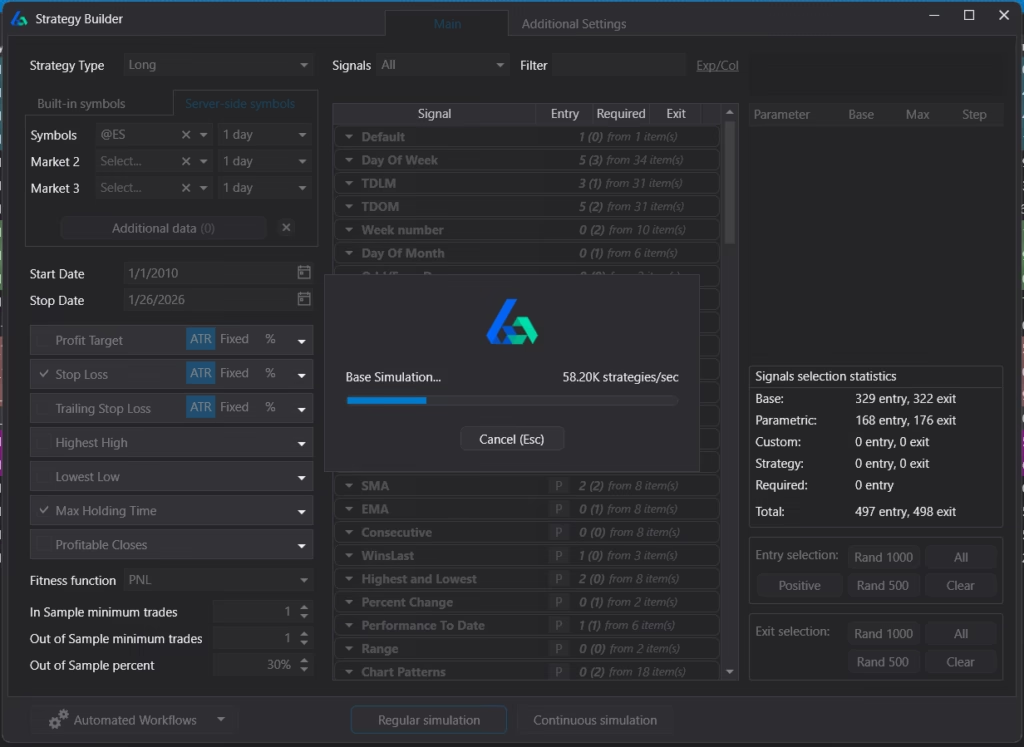
The research process begins with generating potential trading rules. Automated discovery tools can search large combinations of rules and parameters to produce thousands of candidate strategies, far beyond what any manual process could explore.
- Manual hypothesis testing and indicator-based research
- Automated genetic algorithm search across the strategy search space
- Thousands of candidates generated per session
Step 2: Strategy Evaluation
Once strategies are generated, they must be evaluated using statistical performance metrics. Strong historical performance alone does not guarantee future success.
- Profit factor and Sharpe ratio
- Return-to-drawdown ratio
- Win rate and trade frequency
- Objective scoring using fitness functions
Step 3: Candidate Filtering
Automated discovery produces large numbers of strategies. Many will fail basic quality checks. Filtering reduces the population to viable candidates worth validating.
- Minimum trade count thresholds
- Realistic maximum drawdown levels
- Reasonable parameter stability
- Logical, interpretable rule structure
Step 4: Robustness Testing
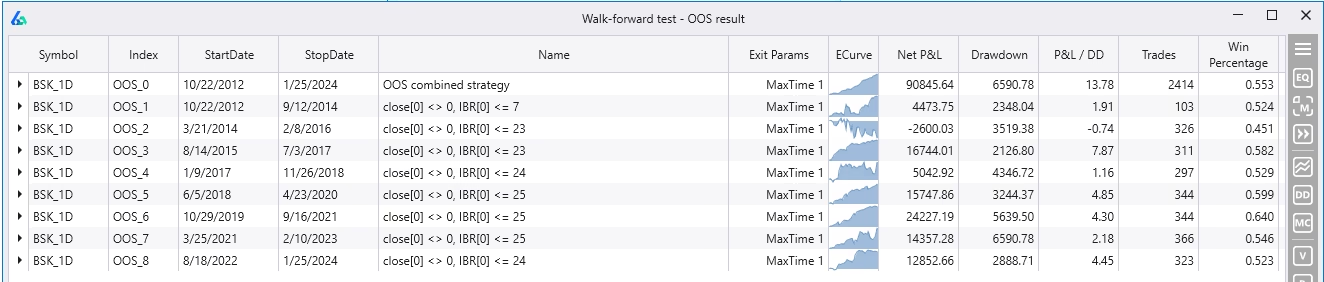
Robustness testing is one of the most important steps. Because strategies are tested on historical data, there is always a risk of curve fitting. Robustness tests determine whether performance is stable under different conditions.
Sample
Forward
Carlo
Test
Benchmark
Critical Principle
Discovery without validation is curve fitting. Every strategy must pass the same robustness tests, no exceptions for strategies that "look good" in backtest.
Step 5: Portfolio Construction
Systematic traders rarely rely on a single strategy. Instead, they combine multiple validated strategies into diversified portfolios.
Step 6: Live Monitoring
Even robust strategies can degrade over time as market behavior evolves. Systematic traders monitor live strategies for signs of decay, tracking drawdown levels, volatility changes, deviations from expected performance, and shifts in market regimes.
When strategies deteriorate beyond acceptable thresholds, they may be modified, replaced, or removed from the portfolio. This is why the workflow is a cycle. Step 6 feeds back into step 1.
Why Continuous Research Matters
Markets evolve. Strategy edges decay. What worked last year may not work next year.
Continuous Research
Systematic trading research is not a one-time process. Professional firms treat strategy development as a continuous research pipeline. New strategies are constantly generated and tested while existing strategies are monitored for performance changes. This continuous cycle allows traders to adapt as market conditions evolve.
Professional firms maintain a research pipeline that continuously generates new candidates while monitoring existing strategies for degradation. When a live strategy begins to fail, it can be replaced with a validated candidate from the pipeline.
The Systematic Research Workflow with Build Alpha
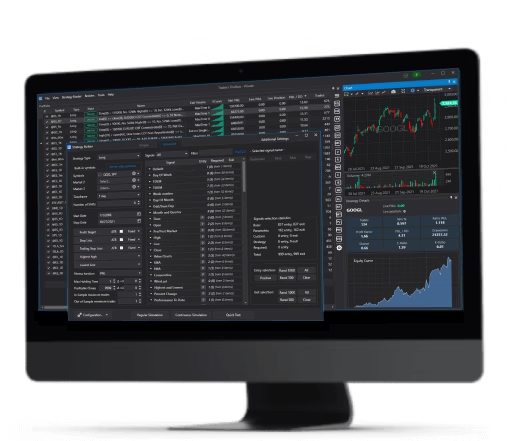
Build Alpha automates large portions of the systematic trading research workflow, from initial candidate generation through robustness validation and platform export.
- Automated strategy discovery with genetic algorithms
- Objective evaluation with fitness functions and 12+ metrics
- Automated filtering and robustness testing pipeline
- Portfolio-level analysis and correlation tools
- Export to TradeStation, NinjaTrader, TradingView, and more
- AI orchestration layer connects your preferred LLM
- No coding required
See Build Alpha's strategy generator software in detail, explore examples of generated strategies, or learn why professionals choose automated over manual trading research.

David Bergstrom
David Bergstrom is the founder of Build Alpha, a no-code platform for automatically generated trading strategies. He has spent over a decade building systematic trading tools used by independent traders, proprietary firms, and hedge funds worldwide.
Frequently Asked Questions
What is systematic trading research?
Systematic trading research is the process of discovering and evaluating trading strategies using quantitative methods and statistical testing rather than discretionary decision-making.
Why do systematic traders test many strategies?
Testing many strategies allows traders to identify patterns not obvious through manual research and helps diversify risk across multiple trading systems. Build Alpha makes it practical to evaluate thousands of candidates efficiently.
What is the difference between discovery and validation?
Strategy discovery focuses on finding potential trading rules, while validation tests whether those rules remain robust using out-of-sample testing, walk-forward analysis, and Monte Carlo simulation.
Why do systematic traders use portfolios of strategies?
Using multiple strategies reduces dependence on any single trading rule and stabilizes long-term performance. Portfolios diversify across market conditions and improve overall risk management.
What tools do systematic traders use?
Platforms like Build Alpha automate strategy generation, robustness testing, and export to TradeStation, NinjaTrader, TradingView, and more.
How do systematic traders monitor live strategies?
By tracking drawdown levels, volatility changes, deviations from expected performance, and market regime shifts. When strategies deteriorate beyond thresholds, they are modified, replaced, or removed.
Final Thoughts
Systematic trading research is what separates professional strategy development from ad-hoc backtesting.
The question is not: "Does this strategy look good?"
The question is: "Did this strategy survive a rigorous, repeatable research process?"
When the workflow is structured, from discovery through evaluation, filtering, robustness testing, portfolio construction, and monitoring, each strategy earns its place through objective evidence rather than subjective impressions.
What Traders Say About Build Alpha




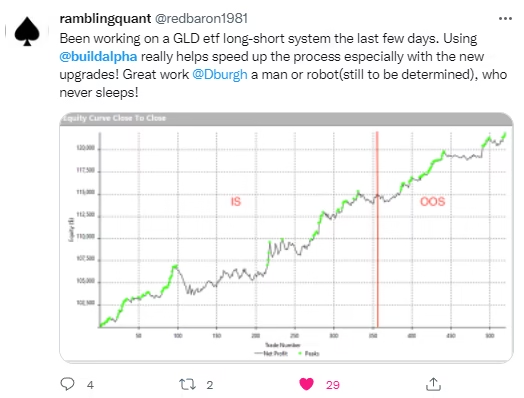










Ready to BUILD ALPHA?
Generate. Validate. Export. The complete systematic research workflow, no coding required.