What Is Automatic
Strategy Generation?
A systematic method of creating rule-based trading strategies using algorithmic search instead of manual design. Discover, evaluate, and refine trading systems at scale.
Table of Contents
- Strategy Generation Explained
- How It Differs from Manual Design
- What Components Are Generated
- What Algorithms Are Used
- The Role of Hyperparameters
- Why It Exists
- What Is the Goal
- Real-World Example
- Does It Use AI?
- The Risk: Overfitting
- Common Misconceptions
- Strategy Generation vs Machine Learning
- Who Should Use It
- How Long Does It Take
- Limitations
- The Strategic Advantage
- Where Software Fits
Automatic Strategy Generation Explained
At its core, automatic strategy generation is the process of defining a rule and constraint universe, generating candidate strategies, evaluating them using performance metrics, filtering for robustness, and selecting candidates for portfolio construction.
The result is not one manually crafted "holy grail" system. It is a population of strategies discovered through algorithmic exploration. These strategies are rule-based and interpretable, not discretionary.
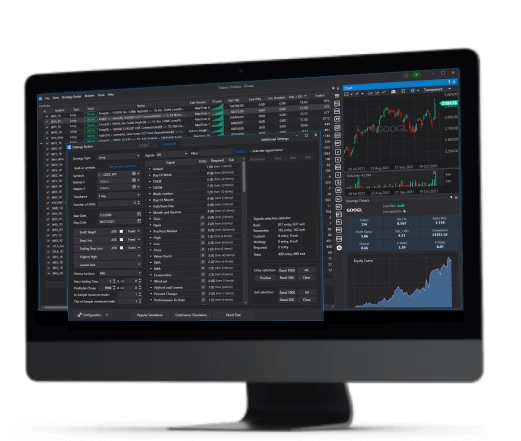
How Is Automatic Strategy Generation Different from Manual Design?
Manual strategy design typically follows this path: develop an idea (hours of screen time), code it, test it, optimize parameters, adjust rules, repeat. This process is limited by human bias, imagination constraints, time, and emotional attachment to ideas.
Automatic strategy generation removes the dependency on idea creation. Instead of testing one hypothesis at a time, it systematically searches combinations defined within a structured rule universe. The difference is scale.
Manual Process
combinations tested
Automatic Process
combinations searched
What Components Are Automatically Generated?
A generated trading strategy may include market selection, entry logic, exit rules, stop-loss logic, profit targets, position sizing rules, indicator parameters, and logical filters.
Each component is encoded into a structured format that allows algorithmic exploration. The system evolves and evaluates combinations according to predefined criteria.
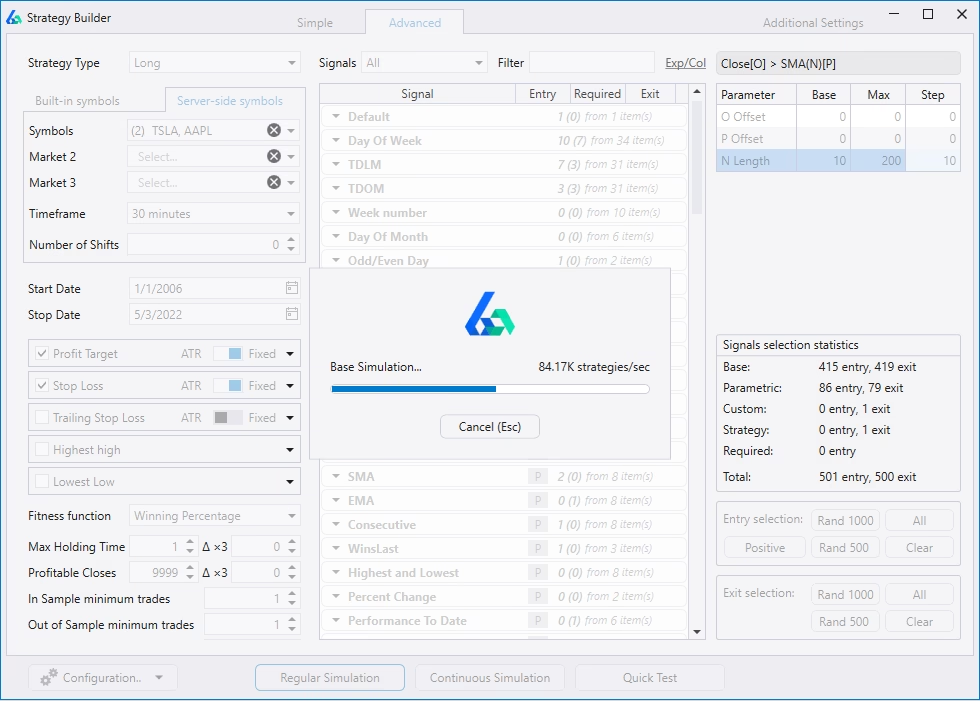
What Algorithms Are Used in Automatic Strategy Generation?
Genetic Algorithms
Population-based evolutionary search. Genetic algorithm trading strategies are popular among quantitative research teams.
Evolutionary Algorithms
Structured mutation and selection frameworks that iteratively improve candidate strategies across generations.
Randomized Search
Controlled random sampling of rule combinations. Faster than exhaustive but less systematic than genetic approaches.
Exhaustive Search
Brute-force evaluation of constrained rule sets. Only practical for very small search spaces.
Each method varies in speed, depth, and computational efficiency.
The Role of Hyperparameters in Automatic Strategy Generation
In addition to strategy parameters (such as indicator lookbacks and thresholds), automatic strategy generation systems also rely on hyperparameters, settings that control the search process itself.
Examples include population size (in evolutionary systems), mutation rate, number of generations, fitness weighting, complexity penalties, and search depth.
Hyperparameters influence how broadly and aggressively the system explores the search space for new automatically generated trading strategies. Too little exploration causes stagnation. Too much resembles random search.
Well-designed systems balance exploration and refinement, ensuring both diversity and convergence toward robust candidates. Hyperparameter discipline is as important as strategy logic and a core component in AI generated trading strategies.
Why Automatic Strategy Generation Exists
Modern markets are complex. The number of possible trading rule combinations grows exponentially as you add indicators, parameters, filters, timeframes, and markets. This is known as combinatorial explosion. Manual testing cannot explore this space efficiently.
Automatic generation exists to scale exploration, reduce bias, improve consistency, and enable portfolio-level thinking.
What Is the Goal of Automatic Strategy Generation?
The goal is not to find one "perfect" strategy. The goal is to build a repeatable discovery process.
Serious systematic traders use automatic generation to generate large pools of candidates, filter for robustness, select uncorrelated systems, construct diversified portfolios, and replace degrading systems over time.
The edge is not one rule set. The edge is structured discovery.
A Real-World Example of Automatic Strategy Generation
To understand how automatic strategy generation works in practice, consider a structured workflow used by systematic traders:
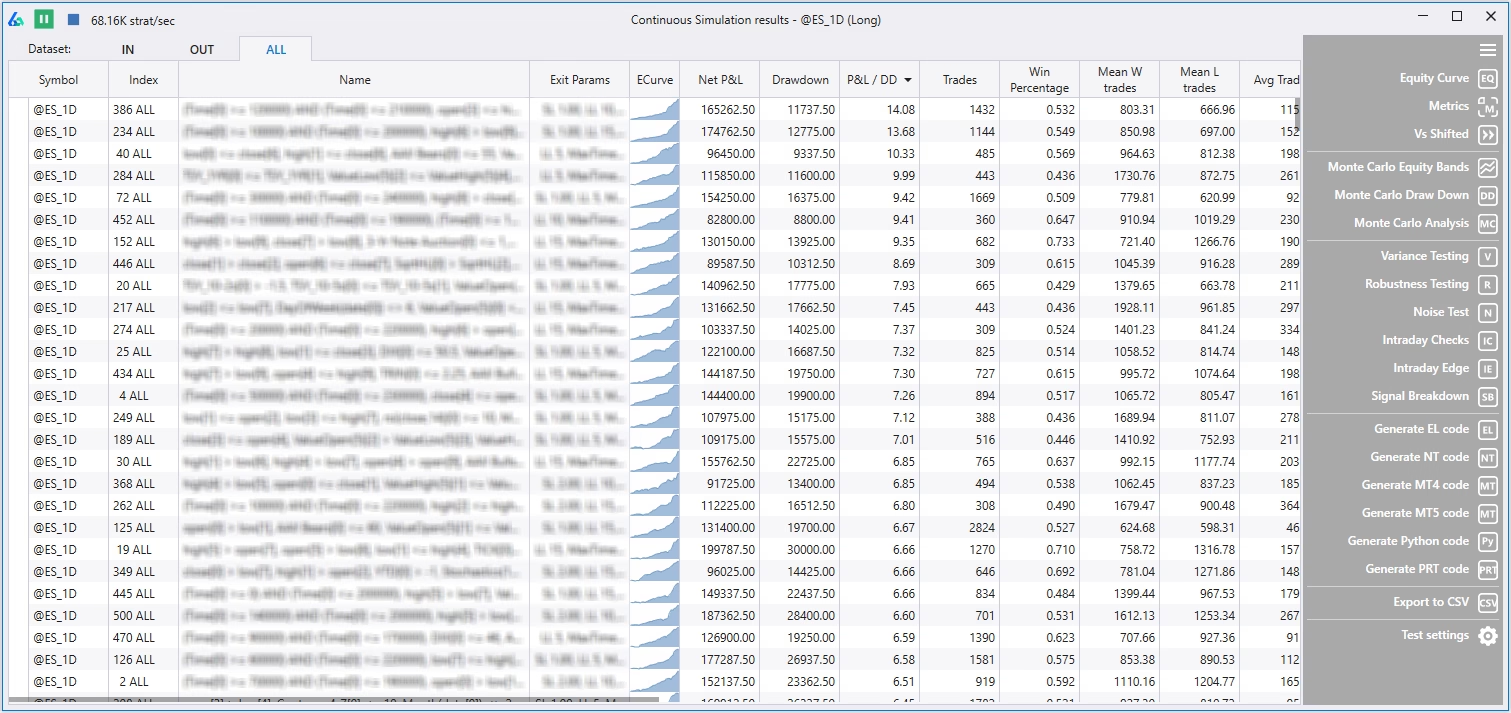
Platforms designed specifically for automatic strategy generation streamline this entire process, integrating discovery, validation, and portfolio construction into a unified workflow.
Does Automatic Strategy Generation Use AI?
Sometimes, but not always. Many automatic systems rely on genetic algorithms, evolutionary optimization, and rule-based search.
AI and machine learning can enhance the process by identifying predictive features, detecting regime shifts, adjusting hyperparameters, and guiding search boundaries. But AI alone is not automatic strategy generation.
Automatic generation refers to structured algorithmic discovery, whether powered by evolutionary search, AI, or hybrid models.
The Risk: Overfitting and False Positives
Automatic generation can amplify both discovery and error. Because it searches extensively, it may find statistical artifacts, exploit noise in historical data, and over-optimize parameters.
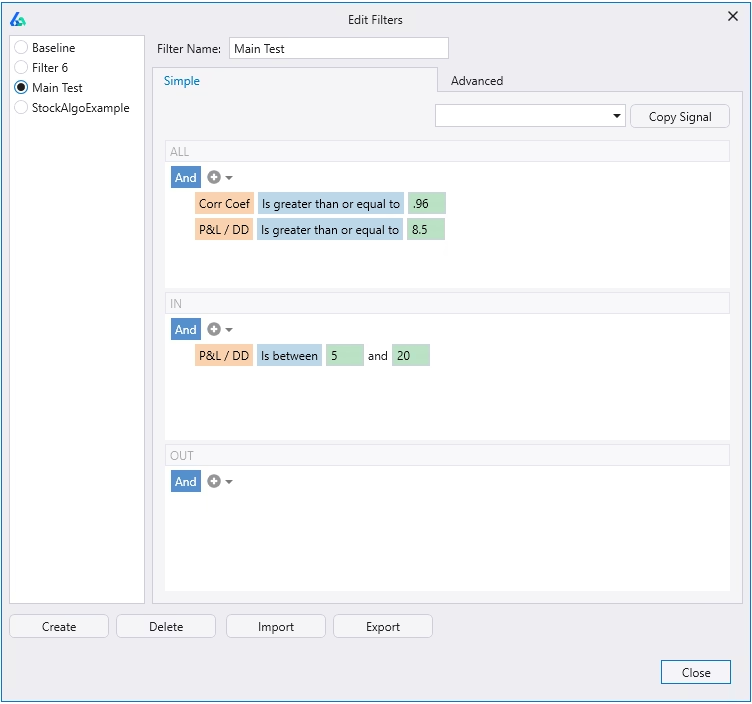
Without strict validation, generated strategies may fail in live trading. This is why serious automatic strategy generation must always include:
- Out-of-sample testing
- Walk-forward validation
- Monte Carlo stress testing
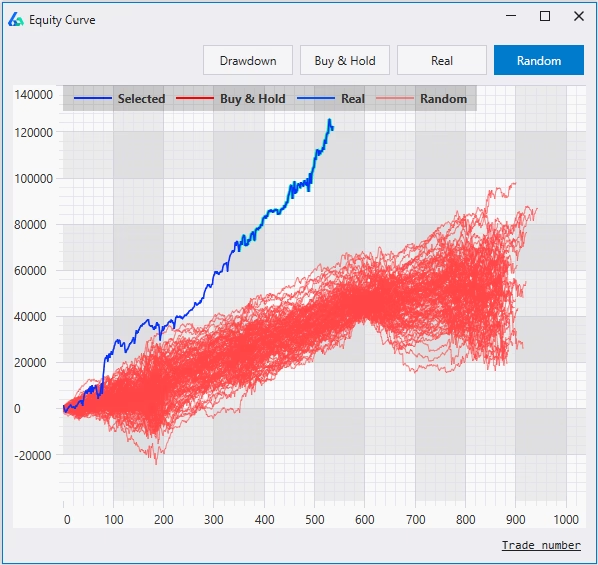
- Vs Random benchmarking
- Parameter stability analysis
- Realistic slippage modeling
⚠ Critical Warning
Discovery without validation is curve fitting. The more combinations tested, the higher the probability of false positives. This is precisely why robustness testing frameworks exist.
Common Misconceptions About Automatic Strategy Generation
It finds a guaranteed profitable strategy
No algorithm can guarantee future profitability. Markets evolve, and all strategies are subject to degradation.
It eliminates the need for validation
Automatic discovery increases the number of candidates. It does not reduce the need for rigorous testing. Validation becomes more important, not less.
It is just "AI magic"
Automatic strategy generation is structured search within defined constraints. It is not predictive clairvoyance.
It replaces risk management
Risk management, position sizing, and execution modeling remain essential components of any systematic approach.
More computation equals better results
Expanding the search space without disciplined constraints often increases false positives rather than improving quality.
Automatic Strategy Generation vs Machine Learning Models
Machine learning models attempt to predict future price movement using statistical pattern recognition. Automatic strategy generation focuses on constructing rule-based trading systems.
| Dimension | Automatic Strategy Generation | Machine Learning |
|---|---|---|
| Approach | Evolves rule structures | Learns statistical models |
| Output | Interpretable logic | Often opaque |
| Constraints | Works within defined rule sets | Requires feature engineering |
| Validation | Easier robustness testing | Harder interpretability |
They can be combined, but they serve different roles.
Who Should Use Automatic Strategy Generation?
✓ Ideal For
- Systematic traders
- Quantitative traders
- Portfolio builders
- Traders frustrated with manual testing limits
- Those seeking structured research workflows
✗ Not Ideal For
- Discretionary traders
- Traders unwilling to validate rigorously
- Intuition-based strategy development
How Long Does Automatic Strategy Generation Take?
The time required depends on the size of the rule universe, the constraints, the number of markets tested, the depth of validation, and available computational power.
Small-scale experiments may take seconds or minutes. Large, multi-market research runs may take hours or longer. However, the goal is not speed alone. The goal is structured discovery followed by disciplined validation.
In practice, serious systematic traders treat automatic generation as an ongoing research process rather than a one-time experiment.
What Are the Limitations?
Automatic strategy generation is not magic. It is sensitive to data quality, fitness function design and selection, hyperparameter configuration, search space boundaries, and execution modeling assumptions.
Garbage in, garbage out still applies. Poorly designed research processes will produce fragile strategies, regardless of computational power.
The Strategic Advantage
Markets evolve. Strategies decay. Automatic strategy generation enables continuous discovery, system replacement, portfolio diversification, and research scalability.
The Mindset Shift
It shifts trading from: "What idea should I test?" to: "How should I design my discovery process?" Continuous discovery of robust candidates. That is the edge.
Where Strategy Generation Software Fits
To implement automatic strategy generation effectively, traders need structured rule engines, high-speed backtesting, robust validation workflows, portfolio construction tools, and execution modeling.
Dedicated strategy generation platforms integrate these components into a unified research framework. Instead of manually iterating through ideas, traders can focus on defining research constraints and selecting robust outputs.
Learn more: Trading Strategy Generator Software →
Final Thoughts
Automatic strategy generation is the evolution of systematic trading research. It replaces manual hypothesis testing with scalable, structured exploration.
When paired with strong validation, portfolio discipline, realistic execution modeling, and robust risk management. It becomes a powerful research methodology.
The advantage is not finding a perfect strategy. The advantage is building a repeatable discovery engine.

David Bergstrom
A decade-plus in professional trading as a market maker and quantitative strategy developer at a high-frequency trading firm with a CME seat. Consulting for hedge funds, CTAs, family offices, and RIAs. Self-taught C++, C#, and Python programmer specializing in data science, machine learning, and trading strategy development.
Frequently Asked Questions
Does automatic strategy generation guarantee profitable strategies?
No. No algorithm can guarantee future profitability. Markets evolve, and all strategies are subject to degradation. Automatic generation is a research tool, not a shortcut.
Does it eliminate the need for validation?
No. Automatic discovery increases the number of candidates, which makes rigorous validation more important, not less. Out-of-sample testing, walk-forward validation, and Monte Carlo simulation are essential.
Is automatic strategy generation just AI?
Not necessarily. Many systems rely on genetic algorithms, evolutionary optimization, and rule-based search. AI can enhance the process but automatic generation refers to structured algorithmic discovery regardless of the method used.
How long does automatic strategy generation take?
Small-scale experiments may take seconds or minutes. Large multi-market research runs may take hours. Serious traders treat it as an ongoing research process rather than a one-time experiment.
Who should use automatic strategy generation?
It is ideal for systematic traders, quantitative traders, portfolio builders, and those frustrated with manual testing limits. It is not ideal for discretionary traders or those unwilling to validate rigorously.
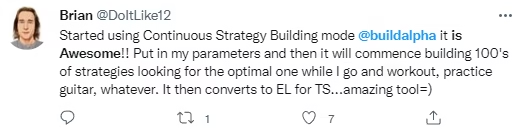
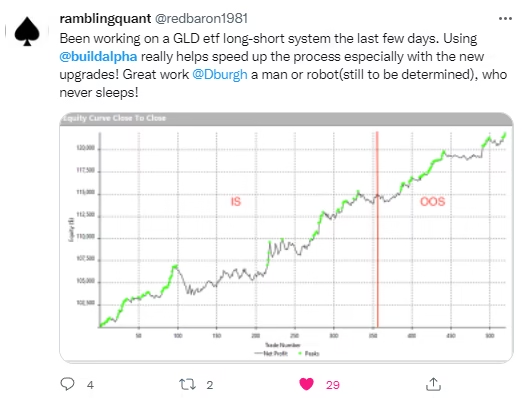
What Traders Say About Build Alpha















Replace Manual Guesswork with
Structured Discovery
Build Alpha automates strategy generation, robustness testing, and portfolio construction. No coding required.