Strategy Generation vs
Strategy Optimization:
What Matters More?
Most traders spend their time optimizing parameters. Fewer ask whether the strategy itself is worth optimizing. That distinction changes everything.
Defining Generation and Optimization
Strategy generation and strategy optimization are both used in systematic trading research, but they solve fundamentally different problems.
Strategy generation is the process of discovering entirely new trading rules by searching through combinations of indicators, entry conditions, exits, and risk management logic.
Strategy optimization is the process of improving an existing strategy by adjusting parameters, such as indicator lengths, thresholds, or stop levels.
Generation expands the universe of possible trading systems. Optimization attempts to improve a system that has already been defined. The distinction matters because the quality of the strategy structure often determines performance more than any individual parameter setting.
Key Distinction
Generation asks: "What rules should I trade?". Optimization asks: "What settings work best for these rules?" The first question is almost always more important.
What Is Strategy Generation?
Strategy generation refers to the process of creating entirely new trading strategies by combining different market signals and rule structures.
Instead of starting with a fixed strategy idea, automated generation systems search through many possible combinations of rules to identify candidates with favorable statistical properties.
A generated strategy might include components such as:
- Entry indicators (momentum, mean reversion, volatility breakout)
- Exit conditions (time-based, indicator-based, trailing)
- Stop loss rules
- Profit targets
- Volatility filters
- Time-of-day or day-of-week filters
Because the number of possible rule combinations is extremely large, automated generation tools are often used to explore this search space. Platforms such as Build Alpha are designed specifically to automate this process by generating and evaluating thousands of strategies during a research session.
What Is Strategy Optimization?
Strategy optimization focuses on improving an existing strategy by adjusting parameters.
For example, a trader might design a strategy using a moving average crossover and then optimize the moving average lengths. The optimization process might test variations such as 20/50, 30/80, or 10/40 period combinations.
The goal is to identify parameter values that produce the best historical performance. Optimization can also apply to other parameters such as stop loss levels, profit targets, indicator thresholds, and volatility filter settings.
While optimization can improve strategy performance, it operates within a fixed rule structure. It cannot discover that a completely different approach, say, a volatility breakout system instead of a moving average crossover, might work better for the target market.
Important Limitation
Optimization can only improve strategies that already have potential. If the underlying rule structure lacks a statistical edge, no amount of parameter adjustment will produce robust long-term performance.
Key Differences Between Generation and Optimization
| Feature | Strategy Generation | Strategy Optimization |
|---|---|---|
| Goal | Discover new strategies | Improve an existing strategy |
| Starting Point | No predefined rule structure | Existing strategy rules |
| Search Space | Very large (millions of combinations) | Relatively small (parameter ranges) |
| Methods | Genetic algorithms, automated search | Parameter sweeps, grid search |
| Primary Output | New trading strategies | Adjusted parameters |
| Overfitting Risk | Managed through robustness testing | High if not validated properly |
| Automation | Essential (search space too large) | Optional (can be done manually) |
Strategy generation expands the set of possible strategies. Optimization refines individual systems. Both play roles in systematic trading research, but they are not interchangeable.
Why Strategy Generation Matters More
Many traders focus heavily on optimization while spending little time on strategy discovery.
This leads to a common research mistake: over-optimizing weak strategies.
If the underlying strategy idea lacks a statistical edge, adjusting parameters is unlikely to produce robust long-term performance. You are simply finding the parameter set that happened to match historical noise most closely.
Strategy generation helps address this problem by exploring a wide range of possible trading rules and identifying candidates with stronger statistical properties. This approach increases the probability of discovering strategies that reflect genuine market behavior rather than random noise.
Generation Strengths
- Explores vast strategy search spaces
- Discovers non-obvious rule combinations
- Reduces human bias in rule selection
- Produces diverse strategy candidates
- Scales research beyond human capacity
Optimization Strengths
- Fine-tunes promising strategies
- Tests parameter sensitivity
- Confirms robustness across settings
- Can reveal parameter plateaus
- Computationally efficient
Think of it this way: generation chooses which mountain to climb. Optimization finds the best path up that mountain. Choosing the right mountain matters more than choosing the perfect path.
Risks of Over-Optimization
Optimization can be a useful research tool, but it also carries significant risks when applied without discipline.
Because optimization selects parameter values that perform best on historical data, it can easily produce curve-fitted strategies. Systems that look impressive in backtesting but fail in live trading.
Common Optimization Risks
Overfitting to Noise
Selecting parameters that match random historical patterns rather than persistent market behavior. The strategy "memorizes" the past instead of learning from it.
Parameter Instability
Small changes in parameter values cause large changes in performance. This fragility signals that results depend on specific settings rather than a genuine edge.
Out-of-Sample Failure
Strategies that performed well during optimization often degrade significantly when tested on unseen data. This is the most common symptom of curve fitting.
False Confidence
Strong optimized backtests create a false sense of security. Traders deploy systems based on results that were manufactured by the optimization process itself.
For this reason, optimization results should always be validated using additional testing methods such as walk-forward analysis, Monte Carlo simulation, and out-of-sample testing.
Combining Generation and Optimization
In professional systematic trading research, generation and optimization are often used together as complementary stages in a larger workflow.
The key principle is: generate first, optimize second.
Generation identifies promising strategy structures. Optimization then fine-tunes parameters within those structures, but only within reasonable ranges and always subject to robustness validation.
Best Practice
Use generation to discover what to trade. Use optimization to refine how to trade it. Then validate both the structure and the parameters through independent robustness tests.
The Professional Workflow
A typical professional research workflow combines generation and optimization into a structured pipeline:
This workflow ensures that researchers are not simply optimizing the first idea that comes to mind. Instead, they are exploring a large space of possibilities, selecting the most promising candidates, and then, and only then, applying targeted optimization.
Why Order Matters
Reversing this order, optimizing first, then trying to generate variations, is a much less effective approach. When you optimize a single strategy idea, you commit to a fixed rule structure before knowing whether better structures exist. Generation-first workflows avoid this trap by exploring the full search space before narrowing focus.
This is essentially the difference between manual and automated trading research. Manual traders tend to optimize their favorite ideas. Automated research systems generate thousands of ideas and let the data determine which structures deserve further refinement.
Automated Research Tools
Automated research platforms make it possible to explore extremely large strategy spaces efficiently.
Rather than manually designing strategies one at a time, automated systems can generate thousands of candidate strategies and evaluate them using predefined performance metrics, all in a single research session.
Tools like Build Alpha automate the full pipeline: generating strategies, measuring their performance through fitness functions, and applying filtering and robustness tests. This significantly accelerates the research process compared to traditional manual strategy development.
The combination of automated generation and structured optimization, followed by rigorous validation, is what separates professional systematic trading research from ad-hoc backtesting.
Who Should Focus on What
The balance between generation and optimization depends on where you are in your research process.
Prioritize Generation If You...
- Are starting from scratch with no strategies
- Want to discover new market edges
- Need to diversify your strategy portfolio
- Are finding diminishing returns from existing systems
- Want to reduce bias in your research
Optimization Alone Is Not Enough If...
- Your strategies keep failing out of sample
- Performance depends heavily on specific parameters
- You are only testing variations of one idea
- Backtests look great but live results disappoint
- You have not explored alternative rule structures
For most systematic traders, the highest-value activity is expanding the number of strong strategy structures in their research pipeline. Optimization is important, but it should follow generation, not replace it.

David Bergstrom
David Bergstrom is the founder of Build Alpha, a no-code platform for automatically generated trading strategies. He has spent over a decade building systematic trading tools used by independent traders, proprietary firms, and hedge funds worldwide.
Frequently Asked Questions
What is strategy generation in trading?
Strategy generation is the process of discovering new trading rule combinations by searching through indicators, parameters, and market conditions. It creates entirely new strategy structures rather than adjusting existing ones.
What is strategy optimization?
Strategy optimization adjusts parameters within an existing strategy to improve historical performance. For example, testing different moving average lengths or stop loss levels within a predefined rule structure.
Is optimization enough to build a trading strategy?
Optimization alone is often insufficient because it only improves existing strategies. If the underlying idea lacks a statistical edge, no amount of parameter adjustment will produce robust long-term performance. Strategy discovery through generation is typically more important.
Do professional traders use strategy generation?
Yes. Many quantitative trading firms use automated research tools to generate large numbers of candidate strategies and identify those with strong statistical properties before applying targeted optimization.
Can strategy generation and optimization be combined?
Yes, and this is the recommended approach. Professional workflows typically generate large pools of candidate strategies first, then apply targeted optimization within reasonable parameter ranges, followed by rigorous robustness testing to validate results.
Final Thoughts
Strategy generation and strategy optimization are both important components of systematic trading research, but they are not equal.
The question is not: "How do I optimize my strategy?"
The question is: "Is this the right strategy to optimize in the first place?"
Generation-first workflows increase the probability of finding strategies with genuine market edges. Optimization then plays its proper role: refining the best candidates rather than polishing weak ideas.
When combined with robust validation techniques, whether using traditional genetic algorithms or AI-assisted generation, and disciplined research workflows, this approach significantly expands the range of strategies available to systematic traders. See examples of generated strategies or explore Build Alpha's strategy generator software.
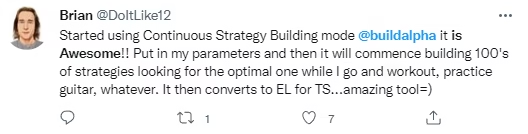
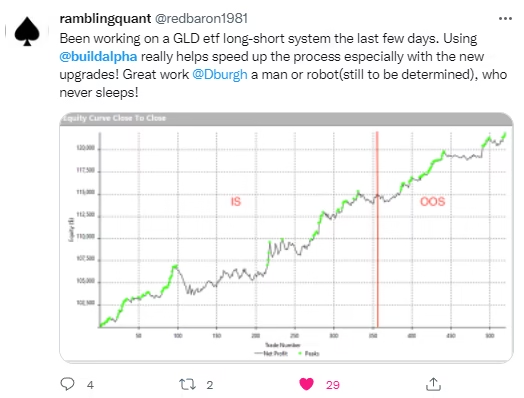
What Traders Say About Build Alpha















Stop Optimizing Weak Ideas.
Start Discovering Strong Ones.
Build Alpha generates, validates, and exports thousands of rule-based trading strategies. No coding required.