Fitness Functions in
Trading Strategy Generation
A genetic algorithm doesn't "know" what a good strategy is. It only knows what you reward. The fitness function defines that reward, and shapes every strategy that emerges.
Table of Contents
- What Is a Fitness Function?
- Why Fitness Changes Strategy Behavior
- Trend-Following vs Mean-Reversion Bias
- Single vs Multi-Metric Fitness
- Custom Fitness Functions
- Blending Multiple Fitness Functions
- Fitness and Overfitting Risk
- Hyperparameters and Fitness
- Portfolio-Level Fitness
- Common Mistakes
- Where Fitness Fits in the Workflow
- Strategic Insight
What Is a Fitness Function?
A fitness function is the objective metric (or combination of metrics) used to evaluate candidate strategies during automatic generation. It tells the algorithm: "Among all these candidates, prefer the ones that score highest here."
The list of automatically generated trading strategies are ultimately the ones with the optimal fitness. Common single-metric fitness examples include net profit, Sharpe ratio, profit factor, maximum drawdown (inverted), return-to-drawdown ratio, CAGR, and Sortino ratio.
During genetic algorithm optimization or evolutionary search, strategies with higher fitness survive, strategies with lower fitness are discarded, and stronger strategies reproduce. The algorithm optimizes whatever the fitness function rewards. Nothing more. Nothing less.
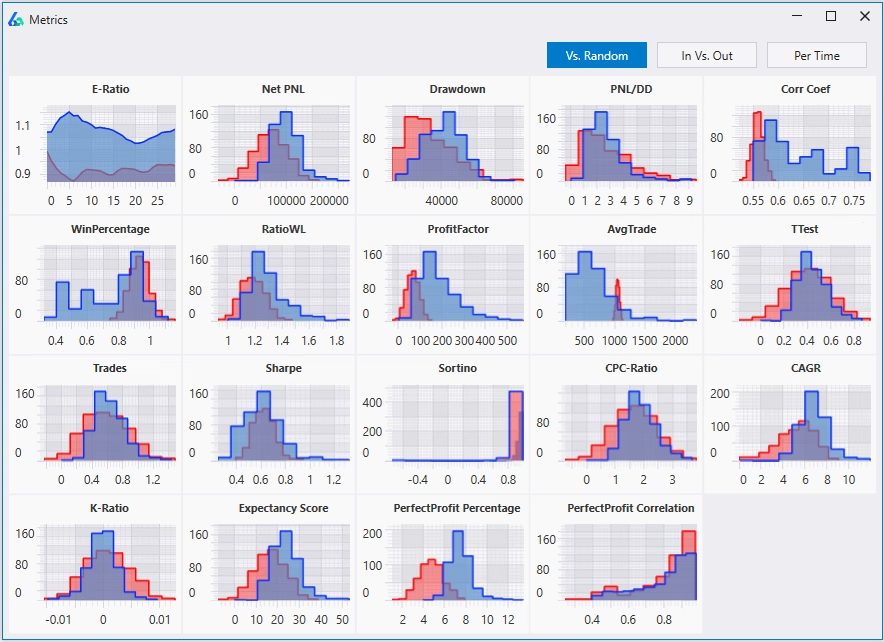
Why Fitness Selection Changes Strategy Behavior
The fitness function acts as evolutionary pressure. Change the pressure, change the species.
Optimize Net Profit
- High volatility strategies dominate
- Large drawdowns tolerated
- Fewer trades, large winners
Optimize Sharpe Ratio
- Smoother equity curves favored
- Lower volatility systems emerge
- More frequent, smaller trades
Penalize Drawdown
- Conservative systems emerge
- Lower risk, lower return
- Tighter equity curves
Reward Trade Frequency
- Shorter-term systems dominate
- Scalping / intraday bias
- Higher turnover strategies
Reward Stability
- Robust parameter zones favored
- Fragile edge exploitation discouraged
- More consistent performance
Reward Win Rate
- Mean-reversion bias increases
- Smaller average trades
- Higher accuracy, lower payoff
The fitness function determines the statistical characteristics of the resulting strategy population.
Trend-Following vs Mean-Reversion Bias
Fitness design can subtly bias the type of strategy discovered. If you change fitness from Net Profit to Sharpe Ratio, you may see trade count increase, average trade size decrease, and holding period shorten. Fitness functions are not neutral. They embed preference.
Trend-Following Bias
- Lower win rates
- Larger average winners
- Longer holding periods
- Deeper drawdowns tolerated
- Convex / long-volatility behavior
Target with: avg trade size, profit factor, win/loss ratio
Mean-Reversion Bias
- Higher win rates
- Smaller average profits
- Shorter holding periods
- Tighter drawdowns
- Concave / short-volatility behavior
Target with: win %, Sharpe ratio, min holding time
Key Insight
If your fitness rewards high win rate → you bias toward mean reversion. Large average trade → trend-following. Smooth equity → you may suppress long-tail trend systems. The fitness function is a strategic lever that determines what your algorithm searches for.
Single-Metric Fitness vs Multi-Metric Fitness
Relying on a single metric may not be optimal. For example: optimizing only net profit frequently produces unstable systems. If two strategies have identical net profit but one has 40% drawdown and one has 15%, a fitness rewarding profit alone would treat them equally.
More advanced approaches use blended or composite fitness functions that reward return, penalize risk, reward stability, and penalize complexity. Balanced fitness functions tend to produce more robust candidates.
Custom Fitness Functions
Serious systematic traders rarely rely on default fitness metrics alone. Custom fitness design allows you to penalize excessive parameter sensitivity, penalize large equity swings, reward smoother equity progression, penalize low trade counts, and enforce minimum robustness thresholds.
This aligns the evolutionary search with specific risk tolerance and portfolio goals. Custom fitness functions allow the strategy generator to reflect your philosophy. Not just generic profitability.
Blending Multiple Fitness Functions
More advanced systems blend multiple fitness dimensions into a single composite objective through weighted scoring, Pareto optimization, or multi-objective ranking.
Adjusting these weights changes the evolutionary outcome. Increase the weight on stability → smoother systems emerge. Increase the weight on return → more aggressive systems appear. Fitness blending becomes a strategic lever.
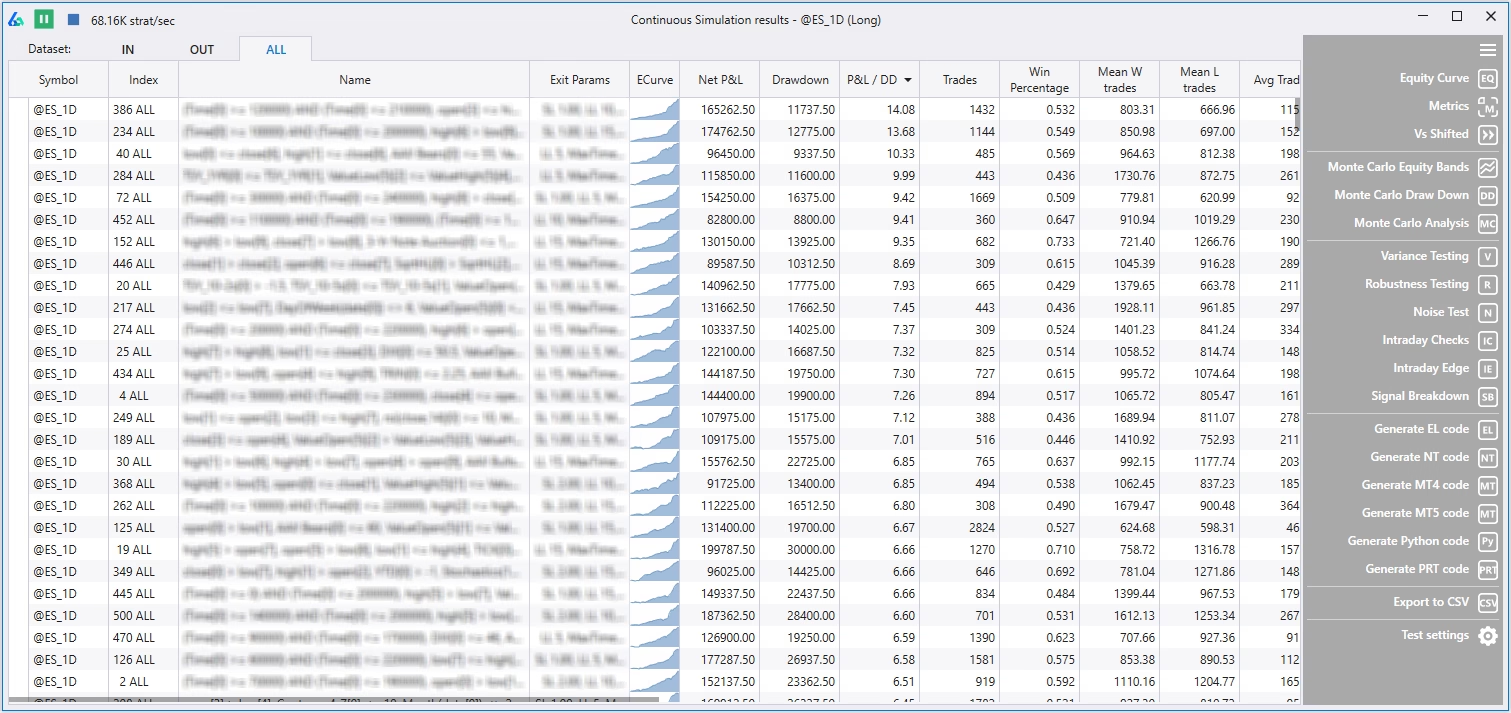
Fitness and Overfitting Risk
Improper fitness design increases overfitting risk. If you overemphasize in-sample profit, ignore out-of-sample stability, or reward extreme parameter values, the system will exploit noise.
⚠ Overfitting Warning
Better approaches include: incorporating out-of-sample performance in fitness, penalizing parameter sensitivity, penalizing excessive complexity, and enforcing minimum trade counts. Fitness should reward robustness, not just performance.
Hyperparameters and Fitness Interaction
Fitness does not operate in isolation. Search hyperparameters (population size, mutation rate, generations) influence how aggressively the fitness landscape is explored.
If mutation rates are too high, the search becomes noisy and fitness signals may be unstable. If mutation rates are too low, the algorithm may converge prematurely. Fitness and hyperparameters must work together. One defines the objective. The other defines the exploration method.
Portfolio-Level Fitness Considerations
When building portfolios, fitness design may also consider correlation with existing strategies, contribution to portfolio Sharpe, marginal drawdown impact, and diversification benefit.
This shifts optimization from single-strategy fitness to portfolio-level fitness. A portfolio constructed from strategies generated from the same fitness function is more fragile than a robust portfolio from many different fitness goals. In advanced research workflows, this distinction is crucial.
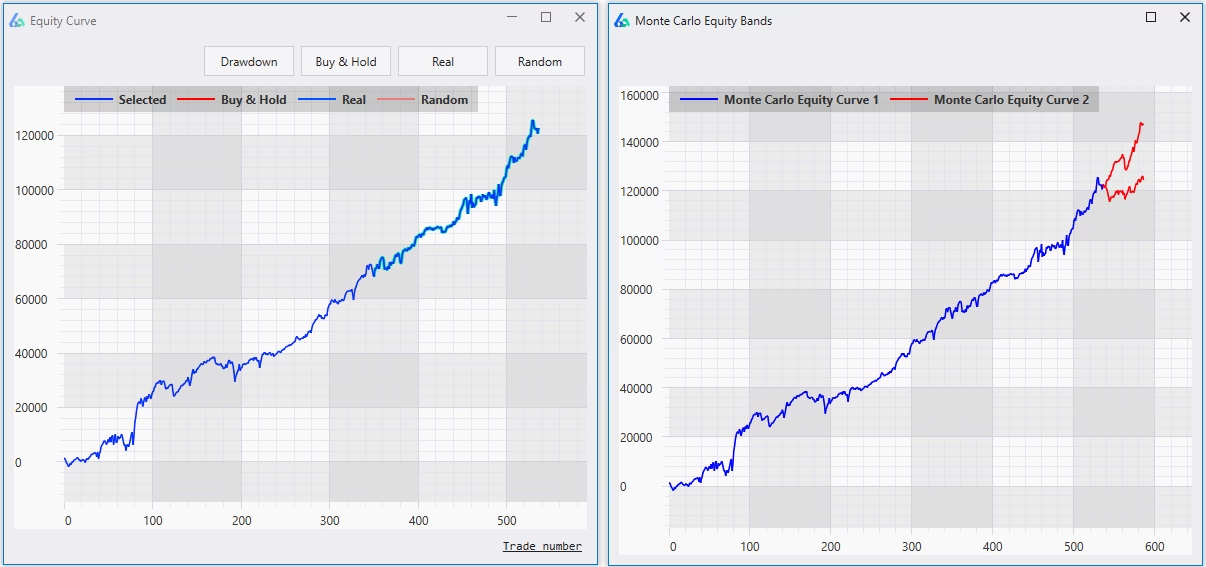
Common Mistakes in Fitness Design
Optimizing only net profit
Ignoring out-of-sample performance
Ignoring trade count
Ignoring slippage & transaction costs
Using unstable metrics
Overcomplicating the objective
Fitness design should be disciplined, transparent, and aligned with risk tolerance. Additionally, fitness design and selection should be portfolio-aware when building trading strategies automatically.
Where Fitness Fits in the Research Workflow
In automatic strategy generation:
Rule Universe
Fitness
Discovery
Filtering
Portfolio
Fitness defines what the algorithm seeks. Validation and robustness testing determine whether it survives. These are not interchangeable.
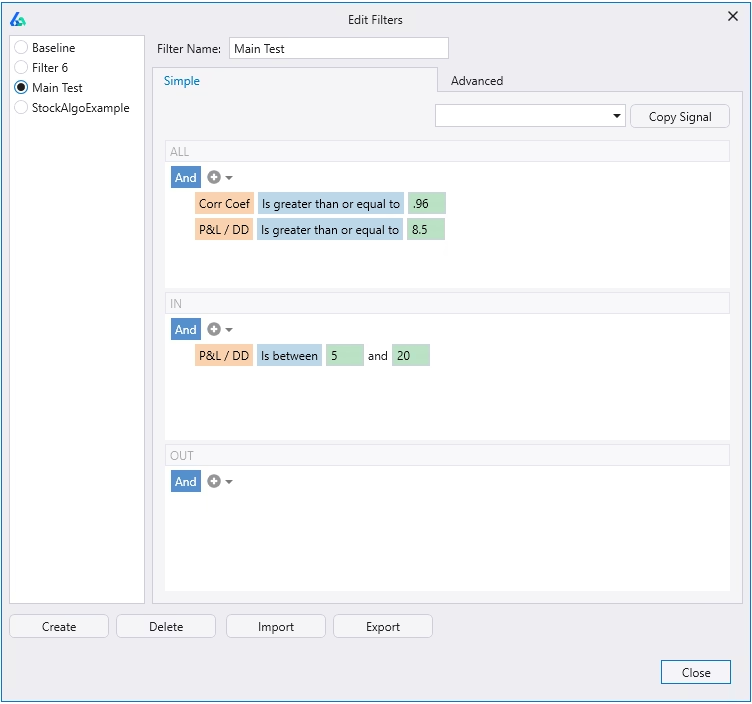
Strategic Insight
The fitness function is not a minor configuration setting. It is your definition of success.
Change the fitness function, and you change the strategy population that emerges. In systematic trading, clarity about objectives determines the quality of discovery. Fitness functions turn automatic strategy generation from blind search into structured optimization aligned with your goals.
The Core Principle
Designing the right fitness function is not about maximizing profit. It is about aligning discovery with disciplined risk-adjusted goals. Used properly, fitness functions transform automatic strategy generation into a controlled research process. Used carelessly, they amplify curve fitting.
Final Thoughts
Automatic strategy generation is only as good as its objective. The fitness function defines evolutionary pressure. It shapes strategy style, risk tolerance, return distribution, stability characteristics, and portfolio compatibility.
The fitness function is the North Star of systematic strategy discovery. It is the objective definition of "good."

David Bergstrom
A decade-plus in professional trading as a market maker and quantitative strategy developer at a high-frequency trading firm with a CME seat. Consulting for hedge funds, CTAs, family offices, and RIAs.
Frequently Asked Questions
What is a fitness function in trading strategy generation?
A fitness function is the objective metric or combination of metrics used to evaluate candidate strategies during automatic generation. It tells the algorithm which strategies to prefer. Common examples include net profit, Sharpe ratio, profit factor, and return-to-drawdown ratio.
Does the fitness function affect what type of strategy is discovered?
Yes. Fitness functions embed preference. Optimizing high win rate biases toward mean-reversion strategies. Optimizing large average trade biases toward trend-following. Optimizing Sharpe ratio favors smoother equity curves. The fitness function determines the statistical characteristics of the resulting strategy population.
Should I use a single metric or multiple metrics for fitness?
Multiple metrics are generally better. Optimizing only net profit frequently produces unstable systems. Blended or composite fitness functions that reward return, penalize risk, reward stability, and penalize complexity tend to produce more robust candidates.
Can fitness function design cause overfitting?
Yes. If you overemphasize in-sample profit, ignore out-of-sample stability, or reward extreme parameter values, the system will exploit noise. Better approaches include out-of-sample performance in fitness, penalizing parameter sensitivity, and enforcing minimum trade counts.
What are common mistakes in fitness function design?
Common mistakes include optimizing only net profit, ignoring out-of-sample performance, ignoring trade count and slippage, using unstable metrics, and overcomplicating the objective. Fitness design should be disciplined, transparent, and aligned with risk tolerance.
What Traders Say About Build Alpha




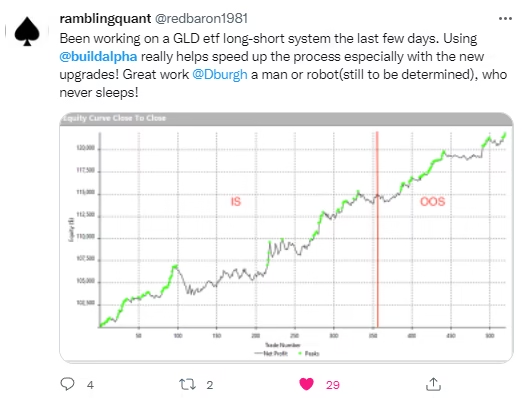











Related reading: See examples of generated strategies that fitness functions helped discover. Learn why generation matters more than optimization, how AI-assisted generation works alongside genetic algorithms, why automated trading outperforms manual design, and how the strategy search space determines what's possible.
Define What "Good" Means.
Let the Algorithm Find It.
Build Alpha lets you design custom fitness functions, generate thousands of strategies, and validate them with one-click robustness testing.